
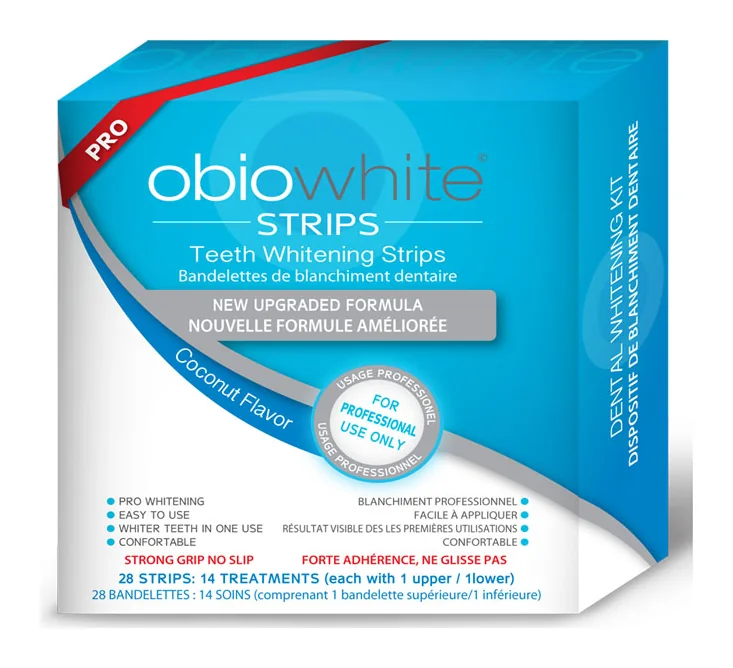
Whitening toothpaste removes stains from the surface, so teeth can look cleaner and brighter, but it doesn’t change the tooth’s natural shade. Kits sold off the shelf vary widely, and you use them without an exam. Professional whitening starts with your dentist: an exam, a peroxide gel that works inside the tooth, protection for your gums, and someone to ask along the way. OBIOWHITE STRIPS belong to that third group: they come through a dentist.
Whitening toothpaste: a polish, not a new shade
Most whitening toothpastes work with mild abrasives or polishing agents that lift stain off the surface of the enamel. After a few weeks, teeth can look cleaner, especially if the stain comes from coffee, tea or smoking. Some toothpastes contain other ingredients too; the label tells you what’s in the tube.
What toothpaste can’t do is change the color of the dentin, the layer under the enamel, where much of a tooth’s color comes from. So whitening toothpaste suits your daily routine and keeping teeth looking clean, but it won’t take a tooth lighter than its own natural shade. For more on the two layers, read How professional whitening works.
Scrubbing harder doesn’t help. Abrasive powders and DIY tricks work on the same principle, scrubbing, so ask your dentist before you rub anything abrasive on your teeth.
Shelf kits: whitening without an exam
Strips, gels, trays and lights sold in stores and online differ in what they contain and how strong they are. Some contain peroxide and some don’t, and the label is where to check. But the bigger difference isn’t the product itself. It’s what’s missing around it:
- Nobody checks first for decay, cracks or gum problems.
- Nobody protects your gums while you whiten.
- Crowns, veneers and fillings on your front teeth keep their color, and sometimes you find that out only at the end.
- Nobody checks your shade before and after, or tells you whether it’s worth continuing.
- When something doesn’t feel right, there’s no one to ask but the label.
Professional whitening: the exam comes first
With professional whitening, your dentist examines your teeth and gums, works out what’s causing the discoloration and tells you what’s realistic. In the clinic, your dentist protects your gums and applies a stronger gel. With OBIOWHITE, that’s OBIOWHITE ULTRA, which per the label contains 27% hydrogen peroxide and is for in-clinic use only. OBIOWHITE whitening is free of pain and sensitivity. The details are on the in-clinic whitening page.
Why OBIOWHITE STRIPS come through your dentist
The OBIOWHITE STRIPS box says FOR PROFESSIONAL USE ONLY. That’s why they aren’t sold off the shelf: your dentist gives them to you after an exam and explains how to use them. Per the label, they contain 6% hydrogen peroxide, and the box holds 28 strips, which make 14 treatments. According to the manufacturer, they’re made to maintain and build on professional whitening done in the clinic. Follow your dentist’s instructions. More on the OBIOWHITE STRIPS page.
The three side by side
| Question | Whitening toothpaste | Shelf kit | Professional whitening |
| What it does | Removes surface stain | Depends on the product; check the label | A peroxide gel that lightens the color inside the tooth |
| Changes the natural shade? | No | Depends on the product | Yes, on natural teeth |
| Exam beforehand | No | No | Yes, always |
| Gum protection | Not relevant | Depends on the product | A barrier in the clinic; strips placed as instructed |
| Crowns, veneers, fillings | Keep their color | Keep their color | Keep their color, and your dentist tells you beforehand |
| Who you ask | The label | The label | Your dentist |
| Best for | Daily routine | — | A visible change in shade, and keeping it |
What all three have in common
Some things no product changes, from the shelf or from the clinic. Crowns, veneers and fillings stay the color they were made. The result depends on your starting shade and the kind of stain: yellowish teeth usually respond better than grayish ones, and some stains respond only partly. And whichever route you take, coffee, tea, wine and smoking bring color back over time, so the habits that follow matter as much as the product. What professional whitening adds is someone who tells you all of this up front, before you start.
How to choose
- Teeth look dull from surface stain? Sometimes a cleaning with your dentist and a good toothpaste are enough. Your dentist will tell you.
- Want a change in the shade itself? That’s the job of professional whitening, in the clinic or with strips from your dentist. The differences are in In-clinic or at home.
- Restorations on your front teeth? Get an exam before deciding, so you know what will change and what won’t.
- Teeth already sensitive? Tell your dentist. See Whitening without pain or sensitivity.
- Already whitened in the clinic? Toothpaste day to day, and strips from your dentist when the shade starts to drift. See Keeping your whitening result.
What to ask your dentist
Is my staining on the surface, or is the shade itself darker? Would a whitening toothpaste be enough, or do I need whitening? Which toothpaste suits my routine after whitening? When should I use strips for upkeep? Terms like extrinsic stain and dentin are explained in our glossary, and there are more answers in our FAQ.