
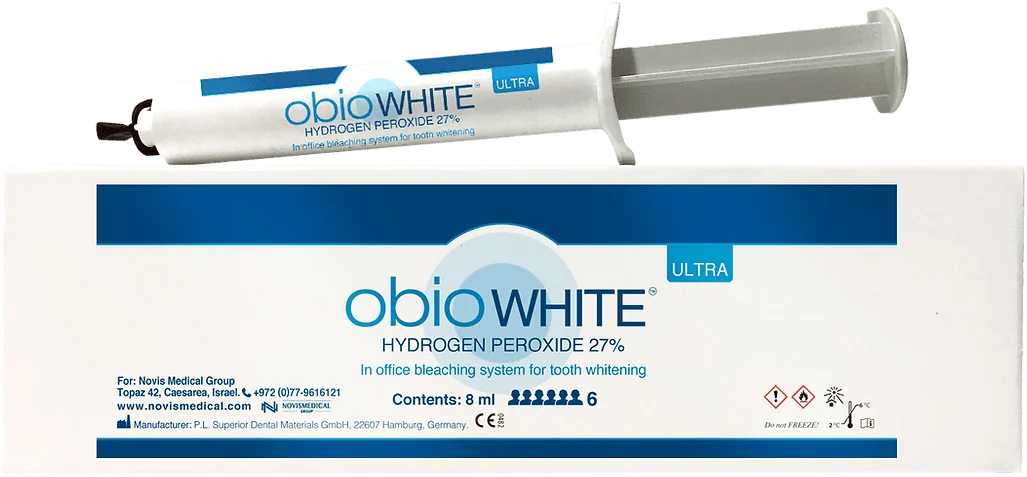
If you want a brighter smile for a big day without the stress, start early. See your dentist first, then book an in-clinic whitening session with some room before the date, and add take-home strips from your dentist if you want to build on the result. Finish your last treatment at least two days ahead: for the first 24 to 48 hours after whitening, the usual advice is to skip strongly colored food and drink, and most celebrations come with wine, coffee and cake.
Start with a checkup, not a whitening appointment
The first step isn’t whitening at all. It’s making sure whitening is right for you. Your dentist checks your teeth and gums, looks for untreated decay, asks about any sensitivity you already have, and takes stock of your existing dental work. If something needs attention first, you want to find out while there’s still time, not the week of the wedding.
There’s another reason to go early: crowns, veneers and fillings don’t change color when you whiten. If you have a restoration on a front tooth, or one is coming up, the order matters. You usually whiten first, then match any new work to your new shade. For what whitening does and doesn’t change, see How professional whitening works.
And don’t skip the professional cleaning. It removes tartar and surface stains, and sometimes that alone changes the picture. It also means whitening starts on clean teeth, so your dentist sees their true shade.
A timeline that works backward from the date
There’s no single number of weeks that fits everyone, but the order is almost always the same. Walk through it with your dentist at the first visit:
- As early as you can: a suitability check and a professional cleaning, plus any treatment that should come before whitening.
- With room to spare before the event: your in-clinic whitening session. It usually takes about an hour, and your dentist will tell you what to expect. More on our in-clinic whitening page.
- After the session, if your dentist recommends it: take-home strips to build on the result. According to the manufacturer, a course of OBIOWHITE STRIPS is one treatment every other day for 7 treatments, 60 minutes each, so roughly two weeks. Your dentist’s instructions come first.
- Two days before: no new whitening. Your teeth are past the stain-prone window, and you’re free to eat and drink normally at the party.
- On the day: keep a glass of water next to the wine or coffee, and enjoy yourself.
Why not whiten the day before? Partly because of that two-day rule, and partly because it leaves no room to adjust. If a front crown suddenly stands out after whitening, or you’d like a little more brightness, only a buffer of time lets you deal with it calmly. For how the in-clinic session and strips work together, read In-clinic or at home.
Date already close? Talk to your dentist anyway. Sometimes a cleaning is the right call for the time you have; sometimes there’s room for an in-clinic session, as long as it ends at least two days before. What to avoid is trying new products at the last minute.
What to plan with your dentist
One good conversation saves a lot of guesswork. Tell your dentist:
- The date, and whether there will be a professional photographer or video
- About any restorations on your front teeth, and any dental work you’re planning soon
- Whether your teeth are already sensitive, and whether you’ve whitened before
- How you want to look: brighter but natural, or something else
In return, ask for a realistic picture. How much lighter teeth get varies from person to person, and yellowish teeth usually respond better than grayish ones. A good dentist won’t promise you a number on a shade guide; they’ll explain what’s likely in your case.
How white is white enough
On a day like this, you want to look like yourself at your best. A lighter, even version of your own teeth looks natural up close and photographs well without pulling attention away from your face. A white that’s too uniform can look flat, especially under strong lighting. For what the camera actually picks up, see Your smile in photos and on video.
Comfort you don’t have to schedule around
OBIOWHITE whitening is free of pain and sensitivity. The treatment is built that way: a prep gel with potassium nitrate, a barrier that protects your gums, and an LED lamp that, according to the manufacturer, gives off no heat. Even so, if your teeth are already sensitive before treatment, mention it at your checkup. That’s part of making sure whitening fits you. The full story is in Whitening without pain or sensitivity.
A calm checklist for event week
- Don’t start anything new in the final week, including a whitening toothpaste you’ve never tried
- Drink water alongside coffee and tea, and use a straw for iced dark drinks
- Brush and clean between your teeth as usual, without scrubbing harder
- Check your smile in daylight by a window, not under warm bathroom lighting
- Have a question? Call your dentist instead of searching online
And the result doesn’t end with the party. For keeping it once coffee is back in your routine, read Coffee, tea and wine after whitening and Keeping your whitening result.
What to ask your dentist
Is whitening right for me, and does anything need treating first? How far ahead of the date should I book the in-clinic session? Should I follow up with strips, and when should I finish? Will any of my restorations stand out afterward? For using strips at home, see our at-home whitening page; for quick answers, our questions page; and if you’d like to talk to us, get in touch.