
Professional whitening doesn’t wear enamel away or strip off a layer of it. The peroxide-based gel breaks down color molecules inside the tooth, and the enamel itself stays where it is. What makes whitening safe is the process: a dental exam first, any decay or gum problems treated before you whiten, protection for your gums, and a dentist who applies the gel and decides how long it stays on. What actually harms enamel is acid and scrubbing, the kind found in viral whitening hacks.
It’s one of the first questions people ask when they’re considering whitening, and a fair one: enamel you lose doesn’t grow back, so it’s worth asking before rather than after. Here’s what happens to the tooth during whitening, what really does wear enamel, and what needs to happen for whitening to be safe.
What whitening does to the tooth
Enamel is the hard outer layer of the tooth, and it’s partly translucent. Underneath it is dentin, which is naturally more yellow and shows through. Over the years, pigments from coffee, tea, wine and tobacco collect on the enamel surface and in the tiny spaces within it, and the tooth looks darker. Both terms are explained in our glossary.
A professional whitening gel contains hydrogen peroxide, which moves into the enamel and dentin and breaks large pigment molecules into smaller ones that reflect less color. Nothing is sanded, etched or peeled away; the change happens inside the tooth, and the enamel stays. That’s the difference between whitening and scrubbing: an abrasive removes what sits on the surface, while whitening removes nothing and changes the color from within. The full explanation is in How professional whitening works.
What does wear enamel
If you’re worried about your enamel, it helps to know what really harms it. Most of the time, it isn’t a treatment at the dentist’s office. It’s things people do at home:
- Acid. Lemon juice, fruit acids and citrus peels rubbed on the teeth and left there soften the enamel surface and, over time, wear it away. What matters is how acidic something is, not what the acid is called.
- Scrubbing. Activated charcoal or straight baking soda, scrubbed hard and often, removes surface stain and a little enamel along with it. As enamel thins, more of the yellower dentin shows through, and teeth can end up looking more yellow, not less.
- Products with no one supervising. Hydrogen peroxide from the drugstore, or a kit used more than its instructions say: there’s no exam beforehand, nothing protecting your gums, and no one deciding how much or for how long.
Each hack is covered in Lemon, baking soda, charcoal: what viral whitening hacks really do to your teeth. For whitening toothpastes and shelf kits, see Whitening toothpaste, shelf kits or professional whitening.
Safety lives in the process
Professional whitening isn’t safe because of a word on the box. It’s safe because of the order things happen in, and who does them. Here’s what that looks like with OBIOWHITE in the clinic:
- An exam comes first. Your dentist checks for decay, gum problems, cracks, worn enamel, exposed roots, restorations and any sensitivity you already have, and decides whether whitening suits you. What that visit looks like is in Your first whitening visit.
- Treatment first, whitening after. Whitening gel should go on healthy teeth and gums, so open cavities and inflamed gums are treated before you whiten. Your dentist decides the order.
- Prep with OBIOACTIVE. According to the manufacturer, the prep gel combines citric acid at a neutral pH with potassium nitrate. At a neutral pH it isn’t acidic, and that’s what sets it apart from lemon juice. More on the OBIOACTIVE page.
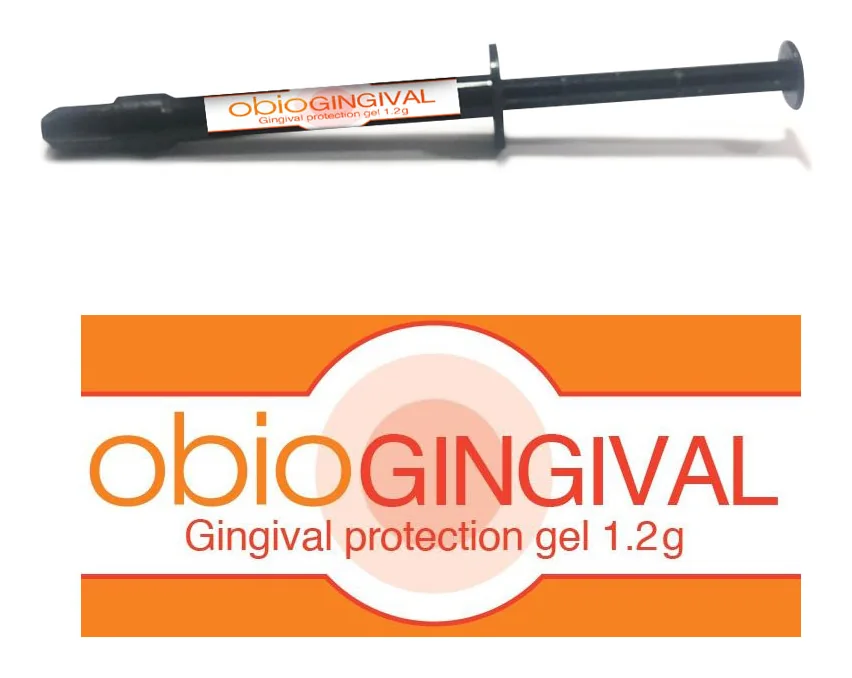
- Gum protection with OBIOGINGIVAL. According to the manufacturer, the gel flows into the sulcus, where tooth meets gum, and covers the papillae between the teeth, so the whitening gel stays on your teeth. See OBIOGINGIVAL.
- Your dentist applies it and sets the time. The whitening gel, OBIOWHITE ULTRA, contains 27% hydrogen peroxide per the label and is made for in-office use. Your dentist applies it, watches your teeth and gums, and decides how long it stays on and when it comes off. The details are on the in-clinic whitening page.
OBIOWHITE whitening is free of pain and sensitivity, and these steps are part of the reason why. Each one is explained in Whitening without pain or sensitivity.
At home: strips, used exactly as directed
Whitening at home has rules too. Per the label, OBIOWHITE STRIPS contain 6% hydrogen peroxide, and the box says they’re for professional use only. That’s why your dentist provides them, after an exam and with clear instructions.
The rule is simple: use them exactly as directed, no more often and no longer. More won’t keep making your teeth lighter, and what protects them at home is the same sequence as in the clinic: an exam, instructions, and your dentist keeping an eye on things. What a course looks like is on the At-home whitening and upkeep page.
When to wait, or check first
- Pregnancy, breastfeeding or a young age. Whitening is a cosmetic treatment, so at times like these it’s usually approached with caution and sometimes postponed. Ask your dentist before you start.
- Untreated decay or inflamed gums. Treatment comes first, whitening after.
- Exposed roots. When gums recede, part of the root is exposed. Roots don’t lighten with whitening, so your dentist checks them and plans around them. Let them know if they feel sensitive today. More in Whitening at 40, 50 and 60+.
- Enamel that’s already worn. Whitening doesn’t bring back lost enamel. If you’ve tried home hacks in the past, tell your dentist what you used and how often, so they can check the state of your enamel.
- Sensitivity you already have. Mention it at the exam. It’s part of the suitability check, and your dentist will plan around it.
What to ask your dentist
What shape is my enamel in, and are there signs of wear? Is there anything to treat before I whiten? Do I have exposed roots or restorations that will stand out afterward? Exactly how and how often should I use the strips at home? Terms like enamel, dentin and gum barrier are explained in our glossary, and there are more answers in our FAQ.