
Most of the at-home whitening hacks going around social media don’t whiten the tooth itself. At best they lift a little surface stain; at worst they damage your enamel. Acids like lemon juice soften it, and abrasives like activated charcoal or baking soda scrubbed on hard wear it down. Enamel that’s gone doesn’t grow back, and as it thins, the yellower dentin underneath shows through more, so your teeth can actually end up looking more yellow. If you want a brighter smile, an exam with your dentist and professional whitening will get you much further.
If you’ve been scrolling lately, you’ve seen it: someone brushes on a paste of baking soda and lemon, scrubs with a black powder or rubs an orange peel over their teeth, and in the next clip their smile is gleaming. It’s tempting. It’s cheap, it’s already in your kitchen, and it looks like it works. It’s just worth knowing what’s going on behind the scenes.
Why it looks like it works
Part of the magic is the camera. A ring light, a filter and a good angle change the color of teeth on screen more than any powder can. For what the camera really picks up, see Your smile in photos and on video. Part of it is real, just not what you think: scrubbing takes off some of the stain sitting on the surface, like coffee and tea stain, so the tooth looks cleaner for a while. The tooth’s own shade, the one that comes from inside, stays where it was. And what the video doesn’t show is how those teeth look after a few months of doing it regularly.
Two words worth knowing: enamel and dentin
A tooth is built in layers. On the outside is enamel, a hard, partly translucent shell. Underneath is dentin, which is more yellow. The color you see in the mirror is a mix of the two, because the dentin shows through the enamel. And one thing matters more than anything else here: enamel that’s lost doesn’t grow back. So anything that slowly and steadily wears it down or dissolves it leaves a mark that stays.
Lemon, strawberries and peels: what acid does to enamel
Lemon juice is very acidic. Acid that stays in contact with a tooth softens the enamel surface and pulls minerals out of it, and over time it wears the enamel away. Dentists call this erosion. Once won’t do dramatic damage, but a hack is usually a habit: brush it on, leave it, repeat every few days. The enamel thins, more dentin shows through, and the trick that was supposed to whiten leaves your teeth looking more yellow.
Strawberries sound gentler, but they contain fruit acids too, and online recipes often mash them with baking soda, so the acid softens and the scrubbing removes. Lemon and orange peels carry the same acids. As for banana peel, there’s no reason to expect it to change the color of your teeth.
None of this means giving up fruit. Strawberries and lemonade are part of life. The difference is between food passing through your mouth and acid you deliberately spread on your teeth and leave there. One small tip for anything acidic: afterward, rinse with water and wait a little before you brush, so you’re not scrubbing enamel that has just been softened.
Wait, then why is there citric acid in OBIOACTIVE?
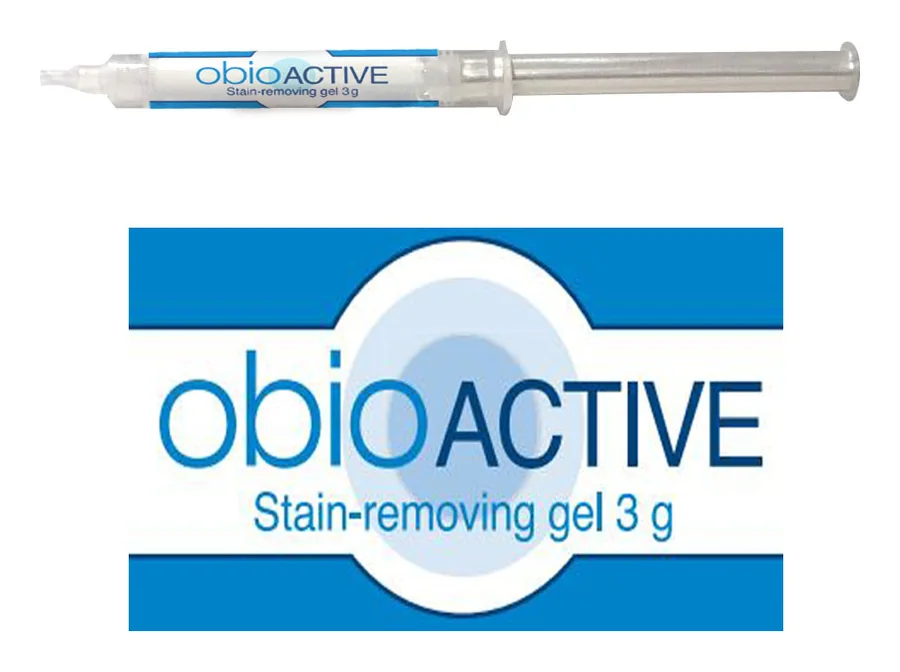
Fair question. OBIOACTIVE, the prep gel your dentist applies before in-clinic whitening, combines citric acid at a neutral pH with potassium nitrate, according to the manufacturer. What harms enamel is acidity, meaning a low pH, not the name of the ingredient. Lemon juice is very acidic. A gel at a neutral pH isn’t acidic.
The second difference is the setting. OBIOACTIVE is applied once, briefly, by a dentist, after an exam, as a planned step within a treatment. Lemon juice in your kitchen goes on without an exam, without a time limit, and sometimes every day. The same logic applies to hydrogen peroxide, as you’ll see in a moment. More about the prep step on the OBIOACTIVE page.
Baking soda and charcoal: scrubbing isn’t whitening
Abrasives work like very fine sandpaper: they remove whatever sits on the surface of the tooth. That’s why they can lift surface stain, but they can’t reach the color inside the tooth. Scrub hard and often, and they take a little of the enamel with them. You know the result by now: less enamel, more yellowish dentin showing through.
Baking soda is mildly abrasive, and it shows up in some toothpastes, where it’s part of a balanced formula. A raw powder you scrub with every day, or a homemade paste of baking soda and lemon, is a different story: the acid softens, and the baking soda scrubs away what was softened.
Activated charcoal is a black, abrasive powder. Whatever it does, it does on the surface, and there’s no established basis for it lightening the tooth’s own shade. That “smooth” feeling afterward is mostly the feeling of polishing, and daily polishing is exactly what you don’t want to do to enamel. For whitening toothpastes and shelf kits, see Whitening toothpaste, shelf kits or professional whitening.
Hydrogen peroxide from the pharmacy: the right ingredient, without the rest
This is the one with real chemistry behind it. Hydrogen peroxide is the active ingredient in professional whitening too: OBIOWHITE ULTRA, the whitening gel applied in the clinic, contains 27% hydrogen peroxide, per the label. But precisely because it’s an active ingredient, the setting is what matters.
A bottle from the pharmacy isn’t made for whitening teeth. There are no instructions for teeth on it, nobody checked beforehand for decay, a crack, inflamed gums or an exposed root, and nothing protects your gums. In professional whitening, all of that is part of the treatment: your dentist examines you first, protects your gums with OBIOGINGIVAL, applies the gel and decides how long it stays on. OBIOWHITE whitening is free of pain and sensitivity, and it’s built that way from the start. The details are on the in-clinic whitening page.
What to do instead
- An exam and a cleaning with your dentist. A professional cleaning removes tartar and surface stain, and sometimes that alone changes the picture.
- Professional whitening in the clinic, which reaches the color inside the tooth, not just what sits on it. See in-clinic whitening.
- At-home strips, through your dentist. OBIOWHITE STRIPS are provided by your dentist, to continue and keep up the result. See At-home whitening and upkeep.
- Simple habits. A soft brush, gentle brushing, and water after coffee, tea or anything acidic. More in Keeping your whitening result.
Already tried a hack or two? Plenty of people have, and there’s nothing to be embarrassed about. Tell your dentist what you used and how often. It helps them check the state of your enamel and plan what comes next.
What to ask your dentist
Do I have any signs of enamel wear? Is my staining on the surface, or does the color come from inside? What will a cleaning alone change, and what would whitening add? Which toothpaste and brush suit me? Terms like enamel, dentin and extrinsic stain are explained in our glossary, and there are more answers in our FAQ.