
Yes, people who smoke can whiten their teeth, and tobacco stains usually respond well to whitening. This kind of stain sits on the tooth and in its outer layer, which is exactly what professional whitening handles best. What whitening can’t do is stop new staining: if you keep smoking, the shade will drift back faster, so your plan should include how you’ll keep the result. And before any whitening, your dentist checks your teeth and gums.
This article isn’t here to talk you into quitting. It’s here to explain what happens to tooth color, what you can expect from whitening, and how to hold on to the result.
What tobacco does to tooth color
Tobacco smoke carries tar and nicotine. Both leave yellow-to-brown deposits that cling to the enamel, settle into its tiny pores, and build up where a toothbrush misses, like between the teeth and along the gum line. Dentists call this an extrinsic stain: it comes from outside the tooth and builds up layer by layer, much like coffee and tea stains. Because it builds up so gradually, it’s easy to miss; many people notice it in a photo, or next to a tooth that’s just been cleaned. More on that in Your smile in photos and on video.
Tobacco also tends to leave tartar, hardened plaque that brushing can’t remove and that picks up color easily. Part of what looks like a dark tooth is often tartar and surface stain, and a professional cleaning removes those before whitening even begins.
What whitening can do
Professional whitening uses a peroxide gel that breaks down color molecules in the enamel and just beneath it. Since tobacco stain is mostly that kind of color, it usually responds well, often better than grayish tones or discoloration from medication or an injury to the tooth. How much lighter your teeth get depends on your starting shade, how much and for how long you’ve smoked, and the tooth itself. Your dentist can usually tell you at the exam what’s realistic.
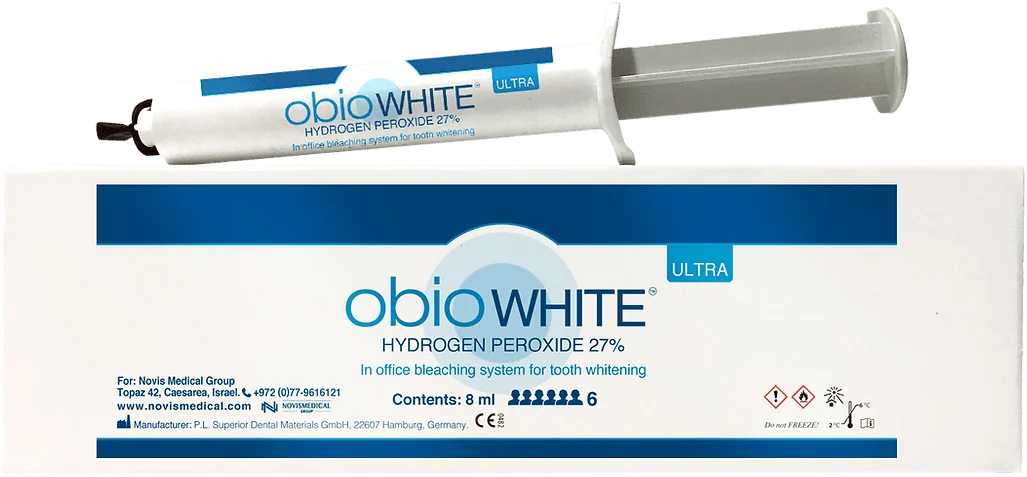
OBIOWHITE whitening is free of pain and sensitivity. In the clinic, your dentist preps your teeth with OBIOACTIVE, protects your gums with OBIOGINGIVAL and applies OBIOWHITE ULTRA, which per the label contains 27% hydrogen peroxide. The details are on the in-clinic whitening page.
What whitening can’t do
- It doesn’t change crowns, veneers, fillings or bonding. They stay the color they were made.
- It doesn’t remove tartar. A cleaning by your dentist or hygienist does that.
- It doesn’t treat your gums. Smoking is linked with gum disease, so your dentist looks closely at your gums before whitening and treats anything that needs it first.
- It doesn’t prevent new stain. That part comes down to what you do afterward.
Before you whiten: an exam, and sometimes a cleaning
The exam is the same as for anyone else: decay, gums, cracks, restorations, and any sensitivity your teeth already have. Tell your dentist plainly that you smoke and how much, and about any other nicotine products you use. It’s not about judgment; it’s about planning. Your dentist will often suggest a professional cleaning before whitening, so the gel works on a clean tooth. Before you leave the exam, ask to have your current shade checked against a shade guide, so you’ll be able to see the change.
Keeping the result if you keep smoking
For the first 24 to 48 hours after whitening, the usual advice is to avoid smoking, along with strongly colored food and drinks. If your dentist gave you different instructions, follow those. After that, a few habits help the shade last:
- Rinse with water after smoking, so less color stays on your teeth.
- Brush twice a day and clean between your teeth, where stain likes to build up.
- Keep up regular cleanings with your dentist, as often as they recommend.
- When the shade starts to drift, touch it up with your dentist’s guidance, for example with OBIOWHITE STRIPS at home. See At-home whitening and upkeep.
- Keep an eye on coffee, tea and wine too; they add color of their own. More in Coffee, tea and wine after whitening.
How long will the result last? It varies from person to person, and for people who smoke, staining usually comes back faster. Checking your shade at regular visits helps you see when it’s time for a touch-up, before the change is obvious.
If you’ve quit, or plan to
Quitting stops new tobacco stain from forming. Some people choose that moment to whiten, as a fresh start for their smile: whitening deals with the old stain, and far less new color builds up from then on. Even if it’s been years since you quit, old tobacco stain is still an extrinsic stain, and it usually responds the same way. There’s no single right order. You can whiten when you quit, wait a while, or whiten without any plan to quit at all. Your dentist can help you pick the timing that works for you.
What to ask your dentist
Is my staining mostly from tobacco, or is some of it from inside the tooth? Do I need a cleaning before whitening? How are my gums? What’s realistic for me, and how will I know when it’s time for a touch-up? Terms like extrinsic stain and shade guide are explained in our glossary, and there are more answers in our FAQ.